Property ownership is a game of invisible risks. Heat moves through assemblies you can’t see. Moisture travels behind membranes and finishes. Electrical faults start as subtle temperature anomalies long before they become smoke, fire, downtime, and insurance claims.
Infrared (thermal) drone imaging changes the math. It doesn’t “guess” where energy loss, wet insulation, rooftop defects, or overloaded electrical components might be hiding—it shows you patterns across the entire asset, fast, with evidence you can share.
This article breaks down what infrared drones can (and can’t) tell you, where they deliver the best ROI for property owners, how to plan a shoot so the results are actionable, and what to demand from a professional team so you don’t end up with pretty pictures that don’t answer real questions.
What infrared drone imaging actually measures
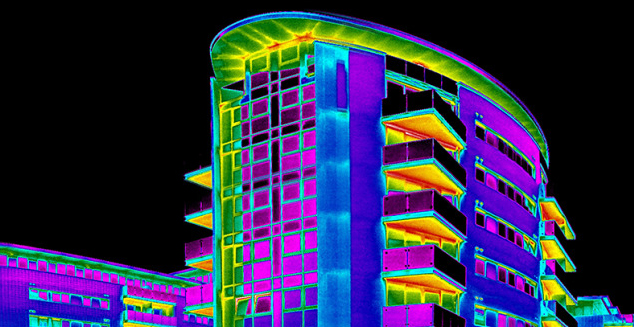
Thermal cameras don’t measure “heat loss” directly. They measure infrared radiation, then convert it into an image of apparent surface temperature. That nuance matters because what you see can be influenced by:
- Emissivity (how efficiently a material emits IR energy)
- Reflections (especially on shiny metals, glass, wet surfaces)
- Wind, sun loading, and ambient conditions
- Thermal lag (materials warm/cool at different rates)
A qualified operator interprets the thermal data in context—pairing it with visible imagery, site notes, and the right environmental window—so you can act with confidence.
Why property owners are adopting infrared drones now
1) Faster, safer coverage than manual thermography
Roofs, façades, solar arrays, and large sites often require lifts, ladders, shutdowns, and extensive labor to inspect closely. Drones reduce time on hazards and compress inspection cycles.
2) A repeatable baseline you can compare over time
A single thermal survey is useful. A scheduled thermal survey is powerful. Once you have baseline data, you can track drift and degradation:
- roof moisture migration
- HVAC performance changes
- recurring electrical hotspots
- insulation failures after storms or renovations
3) Better decision-making for capex, maintenance, and insurance documentation
Thermal findings help you prioritize spend. Instead of “replace the whole thing” vs “do nothing,” you can target repairs, validate contractor claims, and document pre/post conditions.
Best use cases for infrared drones on commercial properties
Flat and low-slope roof diagnostics (especially after weather events)
Infrared drone scans can help identify thermal anomalies that often correlate with:
- trapped moisture in insulation
- membrane separation
- compromised seams/flashing areas
- ponding-related failure zones
Why it matters: Wet insulation loses R-value, accelerates deterioration, and turns a repairable area into a larger replacement later. Thermal surveys can help you isolate suspect areas before opening the roof.
Key tip: Roof thermography is most effective in the right window (often after daytime heating with suitable evening conditions). Timing is strategy, not an afterthought.


Building envelope heat loss and insulation gaps
Thermal imaging can reveal:
- missing or settled insulation
- thermal bridging (structural members transferring heat)
- air leakage pathways around penetrations and openings
- abnormal patterns at roof-wall transitions
Why it matters: Comfort complaints, high utility bills, condensation, and HVAC strain often start here—especially in older buildings or recently remodeled spaces where assemblies changed.
Electrical and mechanical asset risk reduction
Thermal drone imagery (sometimes combined with closer-range thermography where required) can support inspection of:
- rooftop HVAC units
- mechanical exhaust fans and motors
- electrical panels/gear areas where safely accessible and properly planned
- connections and components that show abnormal heating
Why it matters: Overheating often precedes failure. Catching it early helps avoid downtime and emergency repair costs.

Solar array (PV) performance screening
Thermal imaging can flag “hot” cells/modules that may indicate:
- failed bypass diodes
- cell mismatch
- micro-cracks or damage
- soiling patterns or connection issues
Why it matters: Even small PV issues can drag production. Thermal surveys can help you identify problem strings/modules for targeted service.
Construction validation and renovation QA
If you’ve paid for insulation, air sealing, roof work, or envelope improvements, thermal imaging helps validate outcomes:
- identify missed areas
- confirm repairs actually changed thermal performance
- document compliance for stakeholders
Why it matters: You reduce disputes and make punch lists evidence-based.
What infrared drones can’t do (and what to do instead)
Thermal imaging is a diagnostic screening tool—not a magic truth machine.
- It can’t “see through” materials. It shows surface temperature patterns.
- It can’t confirm moisture content without verification. Thermal anomalies often suggest moisture but should be corroborated with targeted core samples or moisture meters (especially for roofing decisions).
- It can be fooled by reflections and sun. That’s why professional planning and interpretation matter.
A trustworthy workflow treats thermal as the map and verification as the compass. You use thermal to focus where you test and repair.
How to plan an infrared drone project that produces actionable results
Define the decision you’re trying to make
Examples:
- “Where should we open the roof to verify wet insulation?”
- “Which façade sections are driving energy loss?”
- “Which PV modules are underperforming?”
- “Did the contractor’s repair actually fix the issue?”
When the goal is clear, the flight plan, timing, and deliverables become obvious.


Choose the right timing window
Environmental conditions can make or break thermal clarity. A pro team plans around:
- solar loading and cool-down cycles
- wind limits
- temperature differentials
- precipitation history (especially for roofing)
Combine thermal + high-resolution visible imaging
Thermal tells you where. Visual tells you what. Together they create:
- clearer interpretation
- better contractor communication
- stronger documentation for stakeholders
Demand a deliverable that’s built for stakeholders
Decision makers need reporting that speaks their language:
- prioritized findings and severity
- annotated imagery
- clear assumptions and limitations
- recommended next steps (verification, repair categories, monitoring)
What “good” deliverables look like for property owners
Depending on the project, we typically structure outputs around how teams actually work:
- Executive summary (what we found, why it matters, what to do next)
- Annotated thermal and visible stills (numbered, geo-referenced when needed)
- Short highlight video (for internal teams, boards, investors, or tenants)
- Asset map or inspection zones (roof sections, elevations, PV strings)
- Before/after comparisons (for repairs and renovations)
- File formats that fit your workflow (web, print, presentations, archives)
The goal is not “more media.” The goal is usable evidence.
Choosing the right provider: questions that separate pros from hobbyists
If you’re hiring infrared drone services, ask:
- What’s your process for timing and conditions (roof, PV, envelope)?
- How do you prevent misreads from reflections and emissivity issues?
- Do you pair thermal with visible imagery and on-site context notes?
- Can you provide deliverables that our facilities team and leadership can act on?
- Are you insured and properly credentialed to operate commercially?
- Can you fly safely indoors for specialized inspections (when appropriate)?
If the answer is “we just fly and send images,” you’re buying risk.
Why St Louis Drone Services for infrared drone imaging
At St Louis Drone Services, we don’t treat infrared drone work like a gadget demo—we treat it like professional image acquisition for business decisions.
We are a full-service professional commercial photography and video production company, operating since 1982, with deep experience supporting businesses, marketing firms, and creative agencies throughout the St. Louis area. We bring the right equipment and the right crew experience to capture, interpret, and deliver imagery that holds up in meetings, planning sessions, and project documentation.
Here’s what that means for you:
- Full-service studio and location video and photography, plus editing and post-production
- Licensed drone pilots and professional production workflows
- Ability to customize deliverables for different media requirements (facilities reports, marketing, stakeholder updates, training, presentations)
- Expertise across file types, formats, and software used by marketing and operations teams
- Use of the latest Artificial Intelligence in our media services to accelerate workflows, improve organization, and streamline content repurposing
- A private studio lighting and visual setup ideal for small productions and interview scenes, with room for props and custom sets
- End-to-end support—from building a private interview studio to supplying professional sound and camera operators
- Capability to fly specialized drones indoors when the environment and safety plan call for it
If you’re a property owner (or advising one) and you want thermal imaging that leads to clearer decisions—rather than a folder of confusing heat maps—St Louis Drone Services is built for that job.
 St Louis Drone Services