If your organization tracks bulk materials—aggregate, coal, salt, scrap, mulch, grain, or recycled product—your stockpile numbers aren’t just “operations data.” They’re financial data. They affect inventory valuation, purchasing, production schedules, customer commitments, and (in many cases) audit readiness.
The challenge is that stockpiles are a moving target. They change daily, they’re rarely tidy shapes, and the environments around them—conveyors, berms, walls, dust, shadows, traffic—make measurement difficult.
That’s exactly why LiDAR drones have become the measurement tool of choice for many sites that need accuracy and repeatability. This article explains what LiDAR is, why it often outperforms image-based methods in real industrial conditions, how a professional LiDAR reporting workflow works end-to-end, and what decision makers should demand in deliverables.
Why Stockpile Measurement Fails in the Real World
Traditional approaches each have a weak point:
- Loader bucket counts: Fast, but heavily assumption-driven and inconsistent across operators, material, moisture, and loading method.
- Tape/rod/hand measurement: Slow, risky, and often too coarse for large or complex piles.
- Occasional survey crew work: Accurate when done right—but expensive, disruptive, and hard to schedule at the pace inventory changes.
- Photogrammetry (image-based 3D): Can be excellent, but can also struggle when surfaces are uniform, reflective, dusty, shadowed, or low-texture.
Stockpiles punish inconsistency. If you change method, change operators, or change assumptions month-to-month, your trend line becomes questionable—even if each individual measurement looks plausible.

For decision makers, the real goal is defensible consistency:
- Can we reproduce this result?
- Can we explain it to finance or leadership?
- Can we audit the workflow?
- Can we compare month-to-month without “method noise” drowning out real change?
What LiDAR Is (and Why It’s Different)
LiDAR (Light Detection and Ranging) measures distance using laser pulses. A LiDAR sensor emits pulses, measures the return time, and produces a dense 3D point cloud—a direct measurement of physical surfaces.
Instead of reconstructing surfaces from pixels (which depends on lighting and texture), LiDAR measures geometry.
For stockpile reporting, this matters because industrial yards are rarely “camera-friendly.” LiDAR is typically more resilient to:
- Low-texture materials (dark coal, uniform sand, wet piles)
- Harsh shadows from structures or high walls
- Reflective or shimmering surfaces (certain aggregates/salt)
- Busy backgrounds with equipment, rails, or clutter
- Sites where the pile-to-ground boundary is hard to see in photos
LiDAR doesn’t eliminate the need for professional workflow, but it often reduces failure modes that cause re-flights, re-processing, and “we don’t trust the number” conversations.
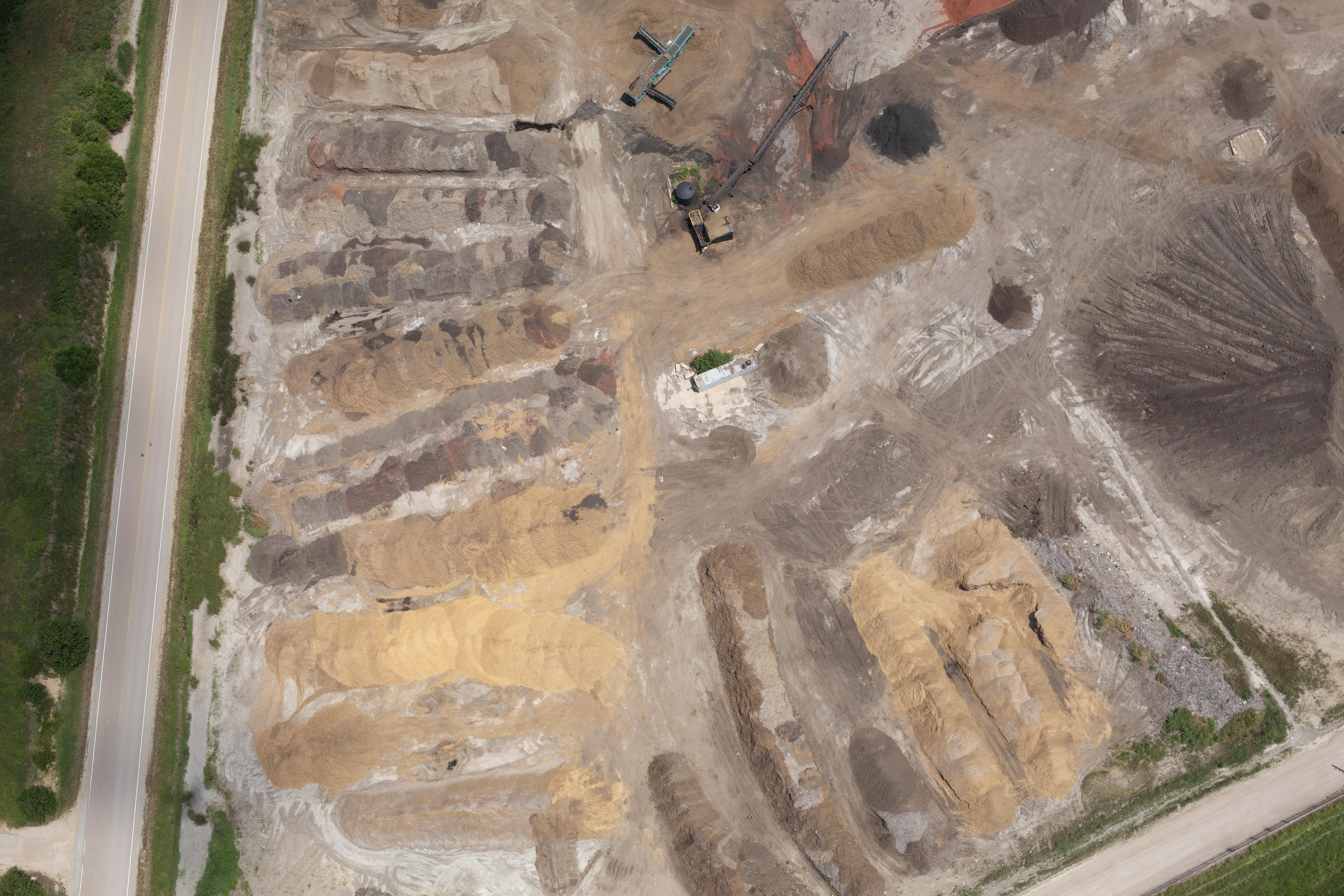

Where LiDAR Drones Improve Accuracy Most
1) Better Surface Definition on Difficult Materials
Image-based modeling can struggle when a pile looks “flat” to a camera—uniform color, minimal texture, or poor contrast. LiDAR doesn’t need texture to measure.
2) Cleaner Separation Between Pile and Ground
A big source of volume error is the base surface. If the “ground” under a pile is guessed wrong, the volume is wrong—even if the top surface looks perfect.
LiDAR workflows can produce more reliable terrain and pile models, especially when paired with solid georeferencing.
3) More Repeatable Results Month-to-Month
Accuracy isn’t only about closeness to “truth” today. It’s about whether your method produces stable, comparable results across seasons, crews, and site conditions.
Repeatability is where LiDAR often shines—because it depends less on lighting and imagery conditions that fluctuate across time.
What “Accurate” Actually Means: Precision, Verification, and Accountability
A key point many vendors avoid: accuracy depends on the whole system, not just the sensor.
A professional LiDAR stockpile program is built on:
- Georeferencing (RTK/PPK and/or ground control)
- Checkpoints (independent verification points)
- Consistent boundary definitions
- Consistent base surface methodology
- Quality assurance documentation
- Versioned deliverables (so “what number did we use last month?” is easy to answer)
If you want confidence from leadership and finance, demand a workflow that includes verification—not just a volume number.
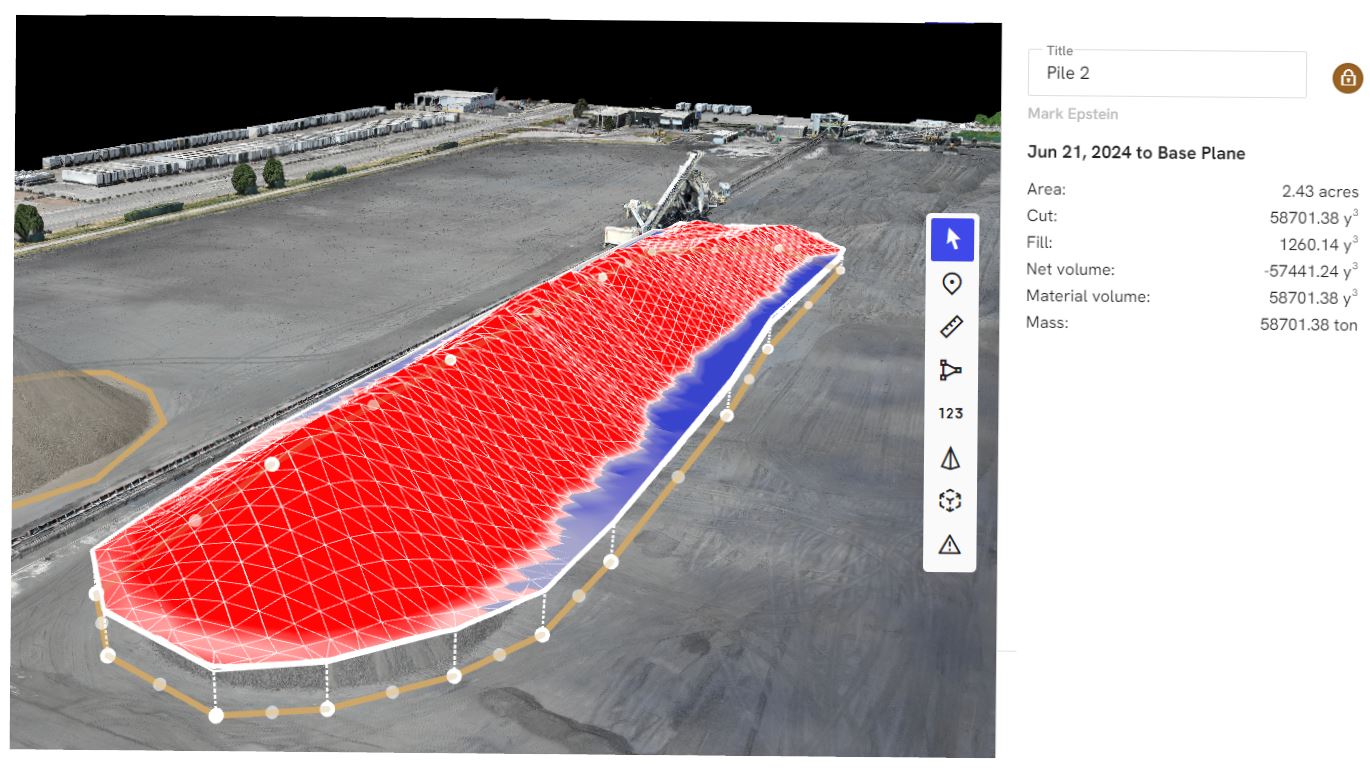
The Professional LiDAR Stockpile Workflow (What You Should Expect)
Step 1: Define the Reporting Rules (Before the First Flight)
Agree on:
- Which piles are in scope
- How piles are named/identified
- How boundaries are drawn (polygons, breaklines, site plan overlays)
- What constitutes the base surface (pad model, terrain model, reference survey)
- Units, rounding rules, and reporting cadence (weekly, monthly, quarterly)
This step prevents downstream disputes.
Step 2: Flight Planning That Reduces Occlusions
Industrial sites have shadows and blockages—conveyors, hoppers, walls, stacked materials. A LiDAR flight should be planned to minimize “blind spots” and maintain safe separation from operations.
Step 3: Capture with Positioning That Supports Accuracy
Depending on requirements, workflows may use:
- RTK/PPK positioning
- Ground control points (GCPs)
- Checkpoints for accuracy verification
A serious provider will tell you what they used and why, and what error tolerance they expect.
Step 4: Processing Into Decision-Ready Models
Processing typically yields:
- Classified point cloud (ground vs non-ground)
- Digital terrain model (DTM) and digital surface model (DSM)
- Pile surfaces and segmented volumes
Step 5: Reporting That Finance Can Use
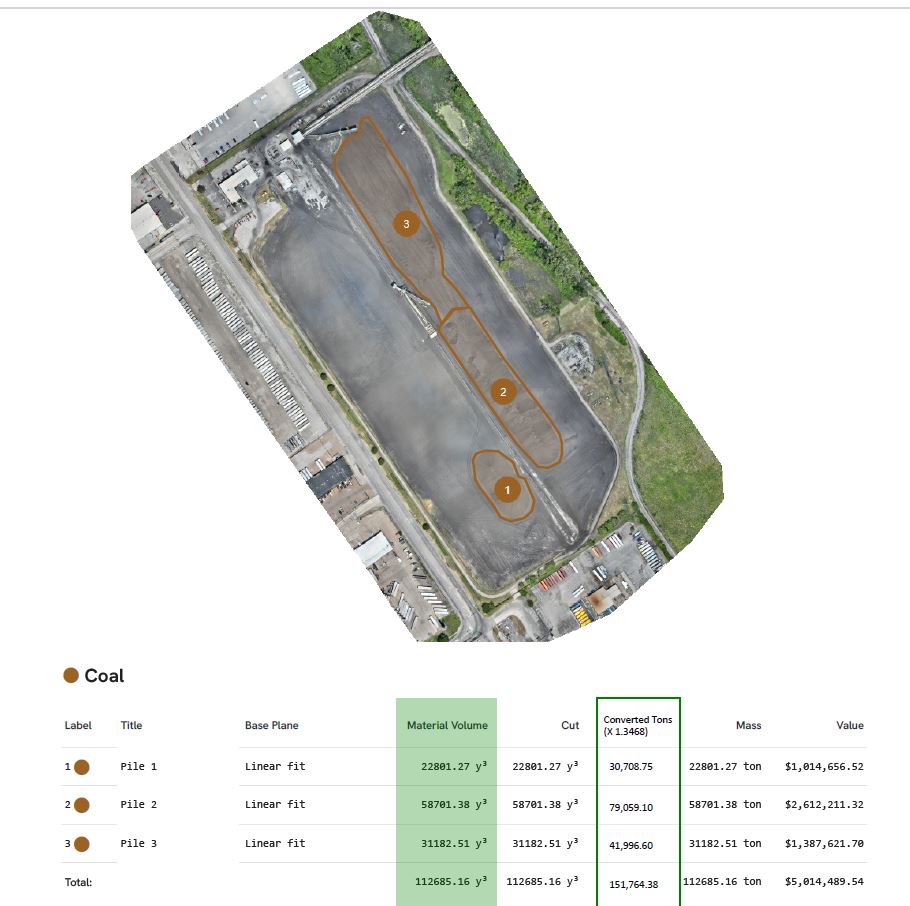
Deliverables should be both readable and auditable. Common outputs include:
- PDF summary report with map views and pile boundaries
- Spreadsheet (CSV/XLSX) listing pile IDs and volumes
- Change tracking vs prior periods (optional but valuable)
- CAD-ready surfaces or contours (when needed for engineering)
Turning Stockpile Reporting Into a Business Process (Not a One-Off Project)
The biggest ROI shows up when you treat LiDAR reporting as a recurring operational discipline:
- Month-end inventory support for accounting close
- Vendor/customer dispute resolution (documented, timestamped, mapped)
- Shrink/loss monitoring over time
- Site planning with 3D yard models
- Operational optimization (flow, layout, safety zones)
A mature program doesn’t just measure. It improves decisions.
The Decision-Maker Checklist: What to Ask Before You Hire a LiDAR Drone Provider
- How do you verify accuracy?
Look for checkpoints, QA notes, and a method you can explain internally. - How do you define pile boundaries and base surfaces?
If boundaries change every time, your comparisons are meaningless. - What exactly do you deliver—and in what formats?
PDF + spreadsheet is a baseline. CAD and GIS outputs may matter depending on teams. - Can you show a sample report from a similar site?
Not just a screenshot—an example with pile IDs, maps, and methodology notes. - How do you work around active operations safely?
A professional crew coordinates; they don’t disrupt.
Why St. Louis Drone Services Is Built for High-Stakes Reporting and Marketing-Grade Visuals
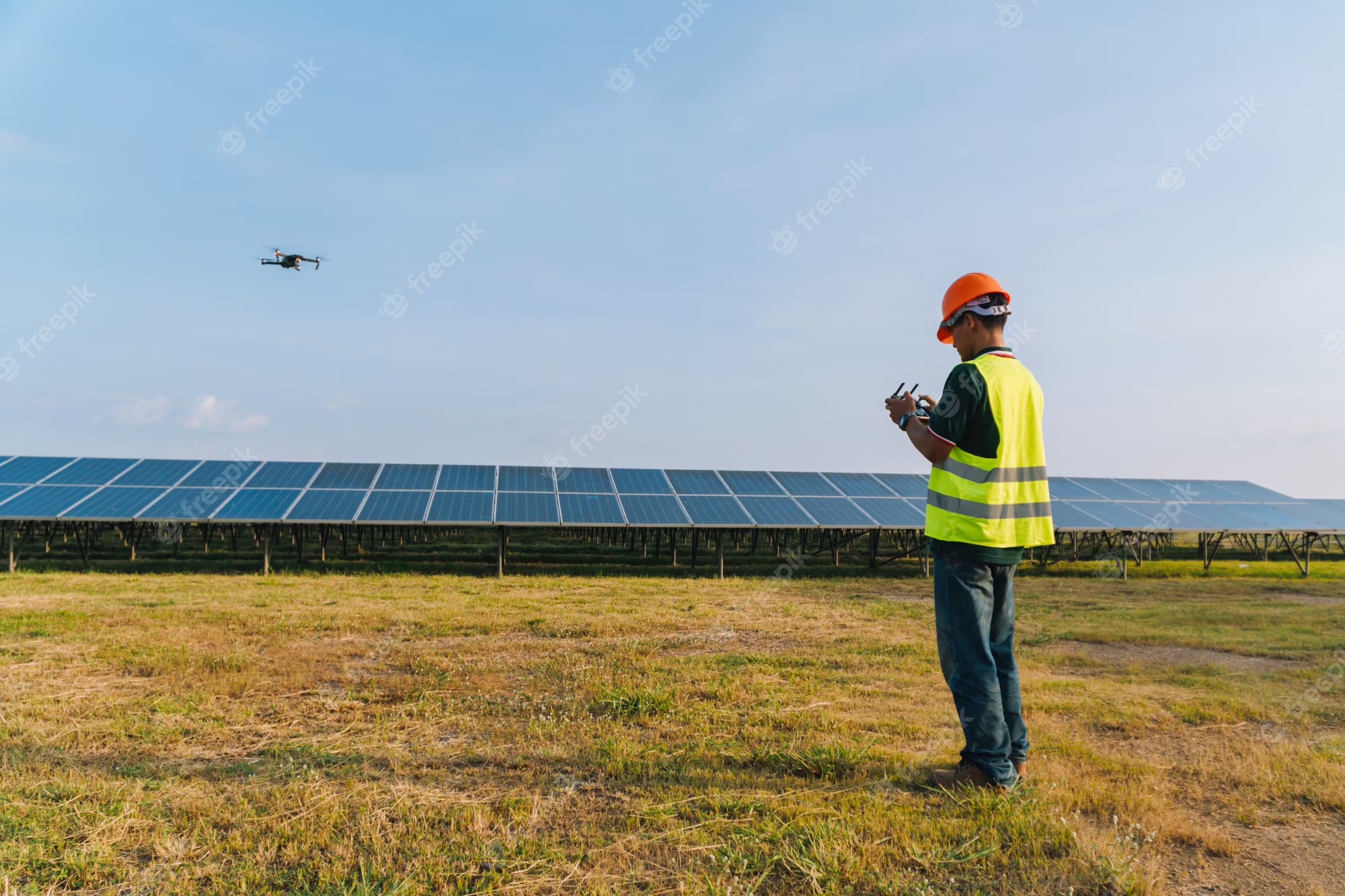
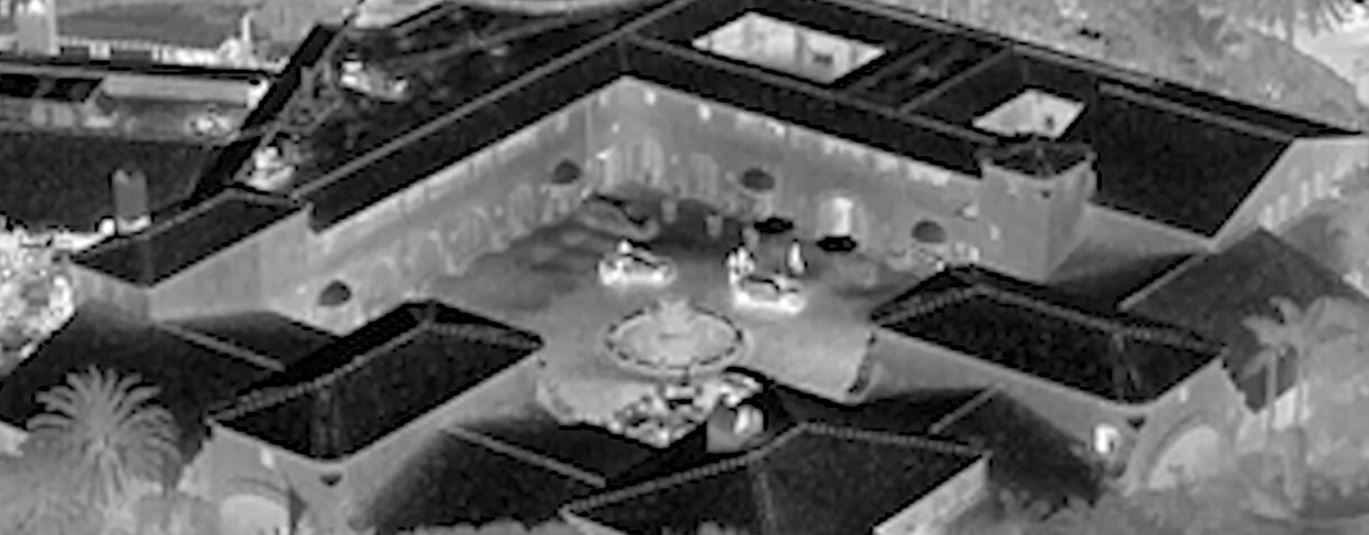
At St. Louis Drone Services, we bring the discipline of full-scale production to industrial measurement and business storytelling—because accurate data and compelling visuals both depend on planning, consistency, and professional execution.
We’re a full-service professional commercial photography and video production company with the right equipment and creative crew service experience for successful image acquisition. We offer full-service studio and location video and photography, plus editing and post-production, and our work is supported by licensed drone professionals. St. Louis Drone Services can customize your productions for diverse media requirements, and repurposing your photography and video branding to gain more traction is another specialty.
We’re well-versed in all file types, media styles, and the software ecosystems used by businesses and agencies. We also use the latest Artificial Intelligence across our media services—helping streamline workflows, improve deliverables, and accelerate production without sacrificing quality.
Our private studio lighting and visual setup is ideal for small productions and interview scenes, and our studio space is large enough to incorporate props to round out your set. We support every aspect of your production—from setting up a private, custom interview studio to supplying professional sound and camera operators, as well as providing the right equipment—ensuring your next project is seamless and successful. And when environments demand it, we can fly specialized drones indoors.
As a full-service video and photography production corporation since 1982, St. Louis Drone Services has worked with many businesses, marketing firms, and creative agencies in the St. Louis area for marketing photography and video—bringing decades of experience to every project, whether the goal is a defensible stockpile report, a 3D site model, or content that sells your capabilities with authority.
If you want stockpile reporting that’s more accurate, more repeatable, and easier to defend internally—LiDAR drones can change the conversation from “best guess” to “business confidence.”
 St Louis Drone Services